Commercial Seeding, Hydroseeding and Erosion Control
Successful seeding depends on more than putting seed in the ground. Site conditions, soil preparation, access, gradient, moisture, erosion risk and the final use of the land all need to be considered before work begins.
Oliver Brown Ltd works with contractors, landowners, local authorities and project teams to deliver practical seeding solutions across a wide range of sites. We can work to an existing specification from a landscape architect or consultant, or advise on a suitable approach based on the project requirements.
Our seeding work can support grassland establishment, amenity areas, wildflower meadows, habitat creation, land restoration, embankments, slopes and erosion control schemes.
Seeding methods tailored to your site conditions
Different sites need different seeding methods. Oliver Brown Ltd provides conventional seeding, hydroseeding and erosion control solutions for commercial, environmental and land restoration projects.
Whether the work involves grassland establishment, wildflower meadows, slopes, embankments or exposed ground, we can recommend the right approach based on access, ground conditions, project specification and long-term use of the site. This can include traditional drilling and cultivation methods, or specialist hydroseeding using products such as Flexterra or ProGanics where a more controlled application is required.
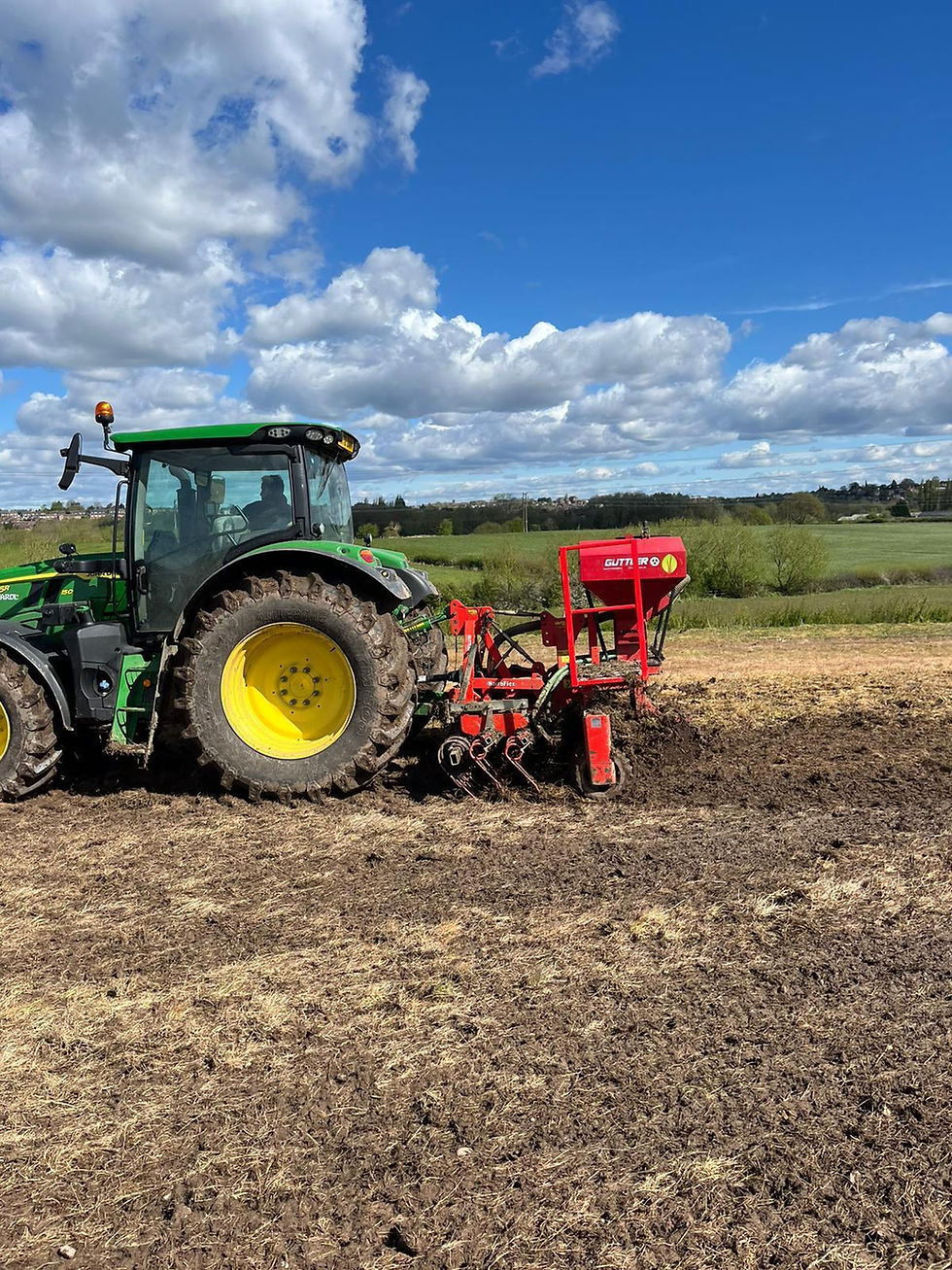
Conventional seeding
For suitable sites, conventional seeding remains a reliable and cost-effective way to establish grass, wildflower and habitat areas.
We use appropriate cultivation and seeding equipment to prepare the ground, create a suitable seedbed and apply seed evenly across the required area. This can include work with agricultural tractors, compact tractors, seed drills, cultivators, power harrows, discs, Guttler and Einbock machinery.
This approach is well suited to larger open areas, accessible land, amenity spaces, restored ground and sites where traditional preparation and drilling methods are practical.

Hydroseeding
Hydroseeding is used where conventional seeding is less suitable, including slopes, embankments, difficult access areas, restoration sites and ground where rapid, even coverage is required.
The process applies a mixed slurry of seed, water and supporting materials to the prepared surface. Depending on the site requirements, this can include products such as Flexterra or ProGanics.
Hydroseeding can be particularly useful where erosion risk needs to be managed, where access is restricted, or where the ground needs a more controlled method of establishment.

Erosion control
Where bare or disturbed ground is vulnerable to water run-off, wind exposure or surface movement, erosion control needs to be considered early.
We provide erosion control seeding and hydroseeding solutions to help stabilise exposed ground, protect slopes and support vegetation establishment. This can be used on embankments, infrastructure projects, restored land, watercourse-adjacent areas and other sensitive or challenging environments.
The right method will depend on the site gradient, soil condition, exposure, access and project specification.
The right equipment for the site
Every site is different, so we use a practical mix of specialist machinery to match the ground conditions and project requirements.
Our seeding equipment can include:
-
Hydroseeder
-
Agricultural and compact tractors
-
Seed drill
-
Cultivators
-
Power harrows and discs
-
Guttler equipment
-
Einbock equipment
This allows us to work across large open sites, smaller or restricted areas, prepared ground, uneven terrain and more technically challenging locations.
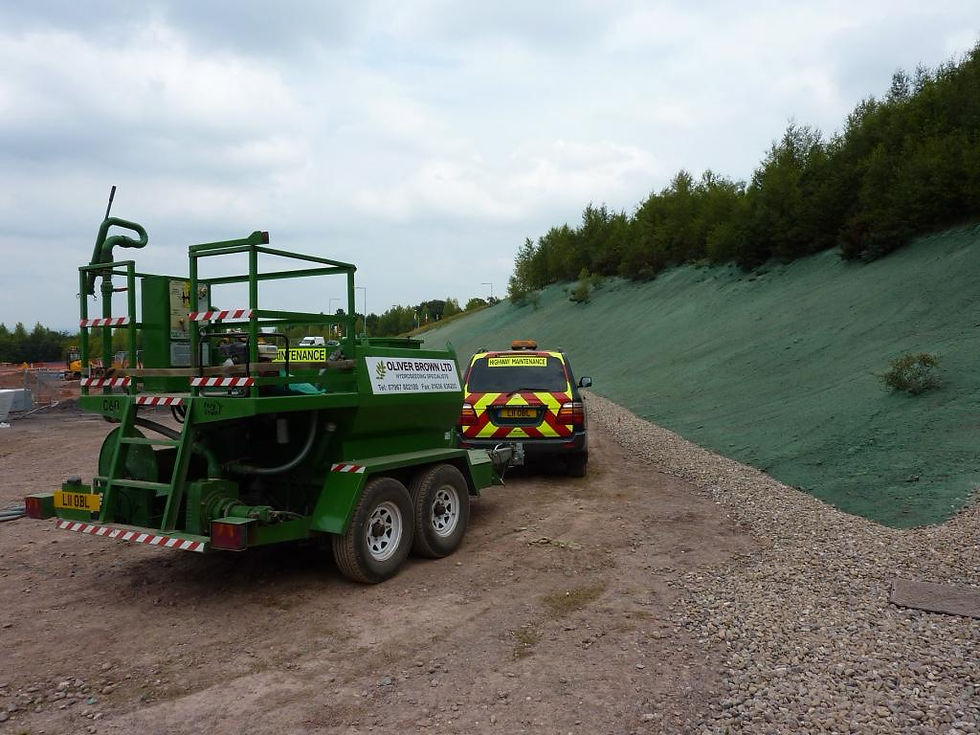
Seeding and hydroseeding for complex commercial sites
Oliver Brown Ltd delivers seeding, hydroseeding and erosion control work across a wide range of commercial, infrastructure and environmental projects.
This includes construction sites, highways, access routes, restored land, quarries, solar farms, habitat creation schemes, amenity areas, slopes, embankments and erosion-prone ground. Each site is assessed on its conditions, access, specification and long-term use, so the right method can be used from the start.
From conventional grass and wildflower seeding through to hydroseeding for more challenging areas, the focus is on practical establishment, ground stability and a finish that supports the wider project. This experience is reflected in the range of sites Oliver Brown Ltd has worked on, including quarries, airports, council schemes, environmental projects and major commercial sites.
Our Recent Projects


How we approach seeding projects
1. Site
review
We review the site conditions, access, ground preparation requirements, specification and any erosion risks.
2. Method recommendation
We confirm whether conventional seeding, hydroseeding or a combined approach is most suitable.
3. Ground preparation
Where required, we prepare the ground using appropriate cultivation and seedbed preparation equipment.
4. Seeding or hydroseeding
Seed is applied using the most suitable method for the site, specification and required finish.
5. Follow-up guidance
We can advise on establishment considerations, aftercare requirements and any related maintenance needs.

"Professional, great at what they do and very easy to work with. We have worked with OBL on various projects and would not hesitate to recommend them."
Steve J, Johnson Quarry Group
"Completed hydroseeding obligations for a large property development and was extremely professional and efficient. Highly recommended."
Tony b
"Oliver Brown work with a great range of hydroseeding machinery. Their industry knowledge is fantastic and they are very much up together with the latest technology."
Mark G





Common questions about seeding and hydroseeding
Planning seeding work can raise practical questions around site access, ground preparation, erosion risk and the best method to use. These FAQs cover the key points to consider before starting a commercial seeding, hydroseeding or erosion control project.
What is the difference between conventional seeding and hydroseeding?
Conventional seeding usually involves preparing the ground and applying seed with machinery such as a seed drill. Hydroseeding applies seed in a sprayed slurry, which can be better suited to slopes, difficult access areas and erosion control projects.
When should hydroseeding be used?
Hydroseeding is often used where conventional seeding is difficult or unsuitable. This may include steep banks, embankments, restoration sites, exposed ground or areas where erosion control is important.
Can you work to a landscape architect’s specification?
Yes. Oliver Brown Ltd can work to an existing seeding specification or advise on a suitable approach where one has not yet been confirmed.
Do you offer wildflower seeding?
Yes. The service overview references grassland, amenity areas and wildflower meadows, so this should be included, provided the final page confirms the exact seed mix and project requirements.
Can seeding be combined with other land management work?
Yes. Seeding can sit alongside wider services such as clearance, habitat creation, planting, ecological contracting, fencing and ongoing land management.